
Date:2026-03-10 Categories:Product knowledge Hits:1869 From:Guangdong Youfeng Microelectronics Co., Ltd
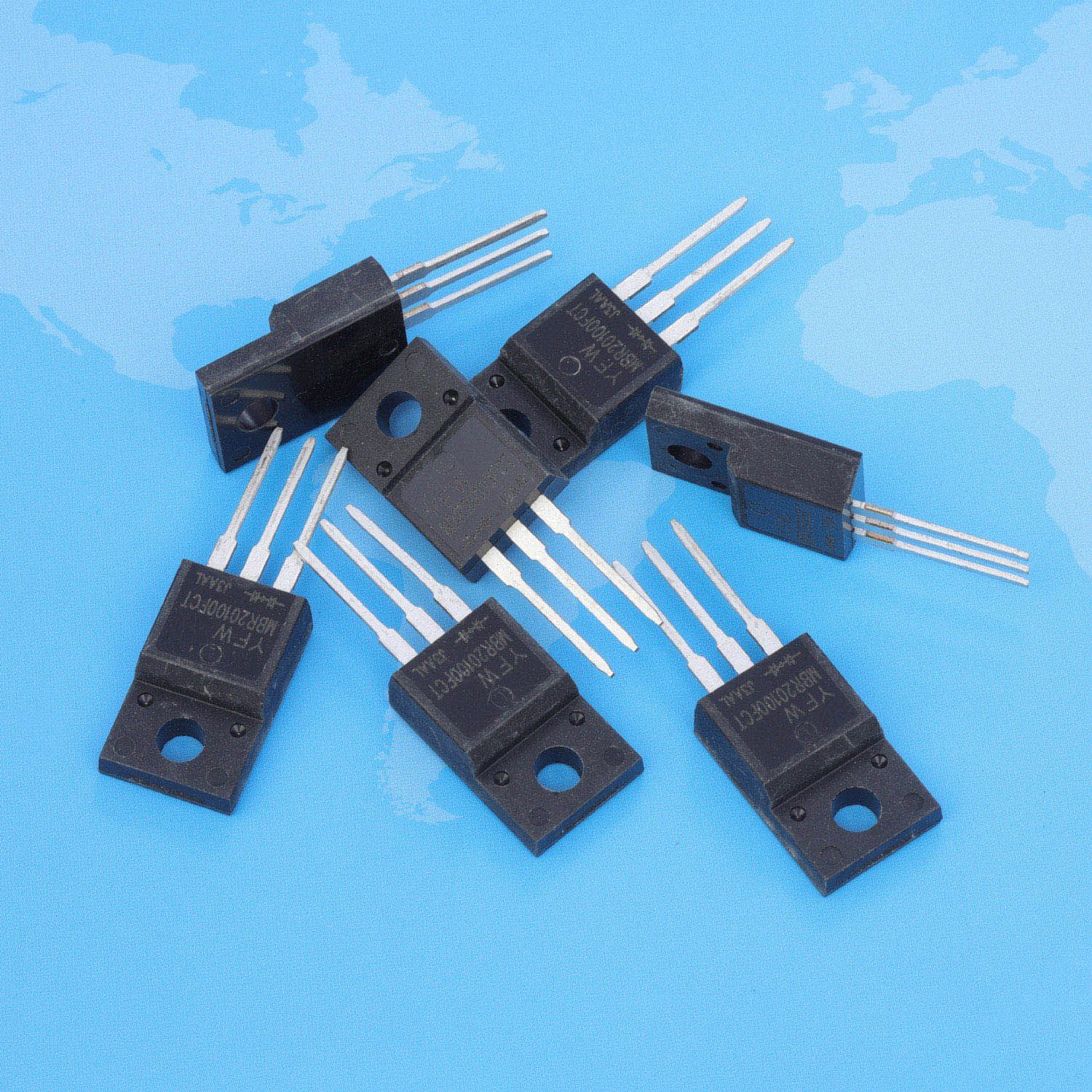
Three terminal Schottky diode, also known as "multi-layer structure bipolar coupled junction double gate MOSFET", is an EP20K200EFC484-3 semiconductor device that can be used in high-frequency amplification, switching, mixing and other circuits. Before judging the quality of a three terminal Schottky diode, we first need to understand its structure and principle. Then, we can judge its quality by.
The structure of a three terminal Schottky diode is similar to that of a regular Schottky diode, but with the addition of a control gate. It consists of an N-type semiconductor material as the anode, a P-type semiconductor material as the cathode, and a metal or N-type region embedded between the two as the gate. This structure enables the gate to control the flow of current between the anode and cathode.
The working principle of a three terminal Schottky diode is based on the formation of a Schottky barrier. When the gate voltage is positive and above the threshold voltage, a forward bias barrier is formed between the gate and cathode, creating a breakdown electric field between the anode and cathode. Current can flow through the "field" region between the anode and cathode. When the gate voltage is negative and close to zero, the potential barrier disappears and current cannot pass through.
The advantage of a three terminal Schottky diode is its lower turn-on voltage and higher switching speed. Its turn-on voltage is generally around 400mV, which means its conduction characteristics are better than ordinary diodes. In addition, due to its Schottky junction, it has the characteristics of fast recovery and low reverse recovery current, making its switching speed significantly faster than ordinary diodes.
The quality of a three terminal Schottky diode (also known as a hybrid junction diode) can usually be judged by referring to the following aspects:
1. Forward voltage drop and reverse leakage current: During normal operation, Schottky diodes should have a small forward voltage drop (usually below 0.2V) under forward bias, and a small reverse leakage current under reverse bias. By using the diode testing function of a multimeter, the forward voltage drop and reverse leakage current of the diode can be measured. If the forward voltage drop is too large or the reverse leakage current is too large, it may indicate a problem with the diode.
2. Reverse breakdown voltage: Schottky diodes have a high reverse breakdown voltage and can withstand high reverse voltages without conducting. A normal Schottky diode has a high reverse breakdown voltage under reverse bias. It can be tested by using a high-voltage meter or special diode testing equipment.
3. Frequency characteristics and switching speed: Schottky diodes have fast switching speed and high-frequency characteristics. The frequency characteristics and switching speed of a diode can be evaluated by measuring parameters such as switching delay and reverse recovery time. Some oscilloscopes can also be used to observe the switching characteristics of diodes at high frequencies.
4. Temperature characteristics: Some characteristics of Schottky diodes change with temperature, so their temperature characteristics can be evaluated by changing the temperature conditions during the testing process. Common methods include using a hot plate or hot air gun to perform thermal testing on diodes.
5. Environmental testing: Place the diode in a testing device that simulates specific environmental conditions, such as high temperature, low temperature, humidity, and vibration, for testing. These experiments aim to evaluate the reliability and durability of diodes. By comparing the electrical performance before and after testing, and observing whether there is any physical damage or failure, the stability and reliability of the diode in different environments can be determined.
6. Packaging and appearance defects: The packaging and appearance of Schottky diodes are also important factors in judging their quality. We need to check whether the diode is damaged, cracked, oxidized, or poorly soldered.
It should be noted that the above methods are for reference only, and the specific situation needs to be determined according to the actual application scenario and product requirements. If you are unsure how to judge the quality of Schottky diodes, it is recommended to consult a professional electronic engineer or use specialized testing equipment for evaluation.
Previous: Classification, Structure, and Principle of MOSFET
Next: Field-effect transistor