
Date:2026-03-02 Categories:Product knowledge Hits:1306 From:Guangdong Youfeng Microelectronics Co., Ltd
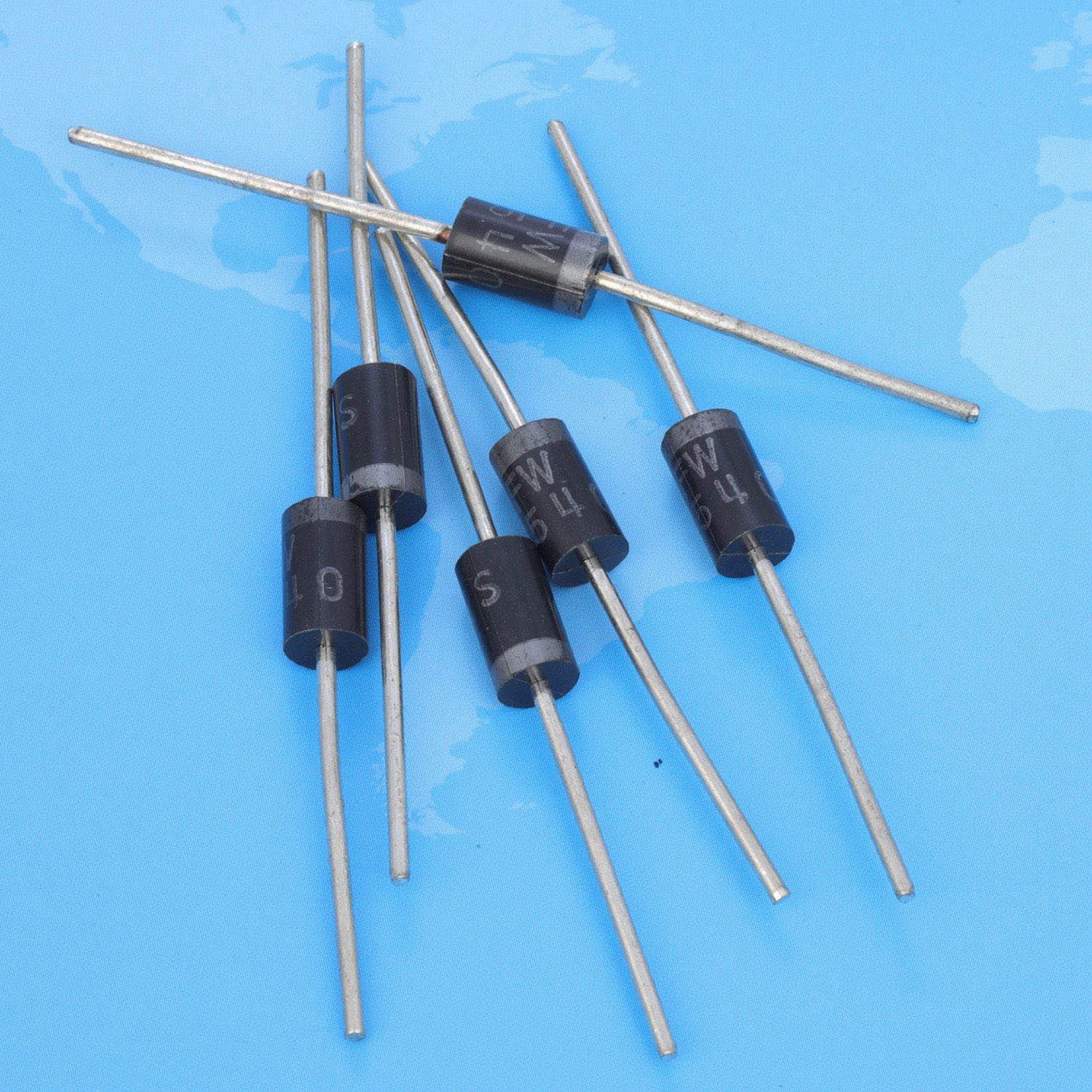
In electronics, rectification is the process of converting alternating current (AC) into direct current (DC). In practical circuits, rectifier circuits are required to convert AC into DC in order to supply power to electronic devices. The rectifier diode ISO124P is a component used to convert AC into DC. It is a semiconductor device, typically made of silicon or silicon carbide. The rectifier diode is a bidirectional conductive device that allows current to pass through it under forward voltage and blocks current under reverse voltage
Characteristics of rectifier diode
The characteristics of a rectifier diode mainly include forward voltage drop and reverse breakdown voltage.
Forward voltage drop refers to the voltage drop generated inside a rectifier diode under forward voltage, typically ranging from 0.5V to 0.7V. This occurs because when the PN junction of the rectifier diode is forward biased, electrons and holes combine, releasing energy and causing the internal voltage of the rectifier diode to drop.
The reverse breakdown voltage refers to the voltage at which a rectifier diode will undergo breakdown and generate a large amount of current under reverse voltage. It is the maximum voltage tolerance of the rectifier diode, typically ranging from several hundred volts to several thousand volts.
Classification of rectifier diodes
Rectifier diodes can be classified based on their structure, working method, and maximum rated current.
1. Structural classification
Rectifier diodes can be classified into ordinary rectifier diodes and Schottky diodes based on their structures. Ordinary rectifier diodes consist of a PN junction formed by a P-type semiconductor and an N-type semiconductor, while Schottky diodes consist of a PN junction formed by metal and an N-type semiconductor.
2. Classification of working methods
Rectifier diodes can be classified into single-phase rectifier diodes and three-phase rectifier diodes based on their working modes. Single-phase rectifier diodes are suitable for single-phase AC power supplies, while three-phase rectifier diodes are suitable for three-phase AC power supplies.
3. Classification of maximum rated current
Rectifier diodes can be categorized into small-signal rectifier diodes and high-power rectifier diodes based on their maximum rated current. Small-signal rectifier diodes are suitable for low-voltage, low-current circuits, whereas high-power rectifier diodes are suitable for high-voltage, high-current circuits.
Common Parameters
The common parameters of rectifier diodes include rated voltage, maximum operating voltage, maximum rated current, reverse leakage current, and reverse breakdown voltage.
1. Rated voltage
Rated voltage refers to the maximum rated voltage of a rectifier diode under forward voltage, typically ranging from 0.5V to 0.7V.
2. Maximum operating voltage
The maximum operating voltage refers to the maximum voltage that a rectifier diode can withstand, typically ranging from tens of volts to thousands of volts.
3. Maximum rated current
The maximum rated current refers to the maximum current that a rectifier diode can withstand, typically ranging from a few hundred milliamps to tens of amps.
4. Reverse leakage current
Reverse leakage current refers to the leakage current of a rectifier diode under reverse voltage, typically ranging from a few microamps to a few milliamps.
5. Reverse breakdown voltage
The reverse breakdown voltage is the maximum withstand voltage of a rectifier diode, typically ranging from several hundred volts to several thousand volts.
In summary, a rectifier diode is a component used to convert alternating current (AC) to direct current (DC). Its characteristics, classification, and commonly used parameters are of great significance for circuit design and component selection.
Previous: Classification, Structure, and Principle of MOSFET
Next: Characteristics and applications of infrared light-emitting diodes